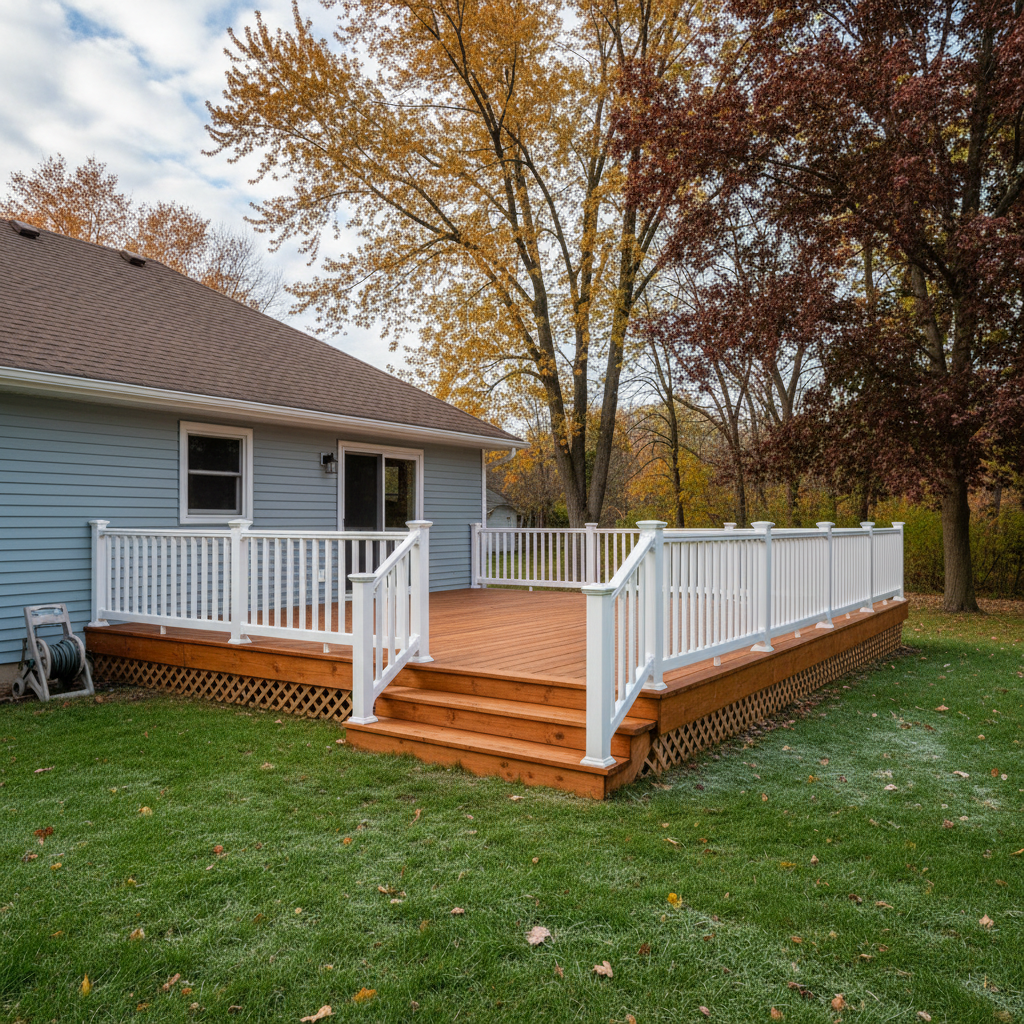
When should you stain your deck here in St. Paul? That's probably the most common question I get, and it's a good one. You might think any sunny day will do, but our climate throws some real curveballs that can mess with even the best staining job.
Timing Your Deck Stain: It's All About the Weather, Not Just the Calendar
Forget what the calendar says for a minute. What you really need to watch is the forecast. We're looking for a sweet spot, usually late spring to early summer, or sometimes late summer into early fall. The key is consistent, moderate weather. You want a few days of dry, stable temperatures, ideally between 50 and 80 degrees Fahrenheit, and low humidity. That's the ideal window for proper adhesion and curing.
Why is this so important? Well, if it's too hot, the stain dries too fast, and it won't penetrate the wood properly. You'll get an uneven, splotchy look, and it'll peel sooner. Too cold, and it won't cure right, leaving it tacky and vulnerable. And humidity? High humidity means the wood itself holds more moisture, and the stain won't dry or cure effectively. I've seen jobs done on humid days where the stain just sat there, never really hardening, and then flaked off within a year. It's a waste of time and money.
Here's a pro tip: After a good rain, give your deck at least two or three sunny, dry days to fully dry out before you even think about staining. Even if the surface looks dry, moisture can still be trapped deep in the wood fibers. I've heard folks in Highland Park talk about how their decks feel damp for days after a heavy spring shower, and they're not wrong. That's why patience is key.
Prepping Your Deck: Don't Skip This Step
Before any stain touches your deck, you've got to clean it. Seriously, this isn't optional. You need to remove all the old, loose stain, dirt, mildew, and anything else that's built up. A good deck cleaner and a stiff brush, or a pressure washer used carefully (too much pressure can damage the wood!), will do the trick. Rinse it thoroughly and let it dry completely. Again, those few days of dry weather are critical here.
If you're dealing with an older deck, especially one that's been neglected, you might need to strip the old finish first. This is more work, but it's essential for a uniform, long-lasting result. Don't try to stain over peeling, flaking old stain; it's just going to peel again, and fast.
Picking the Right Stain for St. Paul Weather
You've got options: transparent, semi-transparent, semi-solid, and solid stains. Each has its pros and cons, but for our climate, I usually steer people towards quality semi-transparent or semi-solid oil-based stains. They penetrate the wood better, offer good UV protection, and hold up well against our freeze-thaw cycles.
Transparent stains look great, but they offer less UV protection and typically need reapplication more often. Solid stains are more like paint; they hide the wood grain but offer maximum protection. The downside is they can peel more easily if not prepped perfectly or if moisture gets trapped underneath.
Whatever you choose, invest in a good quality product. Cheap stain is a false economy. It won't last, and you'll be doing the job again much sooner.
Protecting Your Investment Year-Round
Once your deck is stained, it's not a set-it-and-forget-it deal, especially here in Minnesota. Our winters are brutal, with snow, ice, and fluctuating temperatures. Summers bring intense sun and humidity. Here's what I tell my clients at St Paul Deck Solutions:
- Keep it Clean: Sweep off leaves, dirt, and debris regularly. Don't let puddles sit for long periods.
- Watch for Mildew: If you see green or black spots, clean them off with a deck cleaner. Mildew holds moisture and can break down your stain.
- Snow Removal: When you're shoveling snow off your deck, use a plastic shovel and be careful not to scrape the surface. Don't use rock salt or ice melt on your deck; it can damage the wood and the finish. Sand is a safer bet for traction.
- Inspect Annually: Take a good look at your deck every spring. Are there any areas where the stain is fading or peeling? Catching small problems early can prevent bigger, more expensive repairs down the road.
A well-maintained deck not only looks better, but it'll also last a lot longer. It's all about understanding our local conditions and giving your deck the attention it needs to stand up to them.
```を切ってしまったようです。続きを生成します。```json {