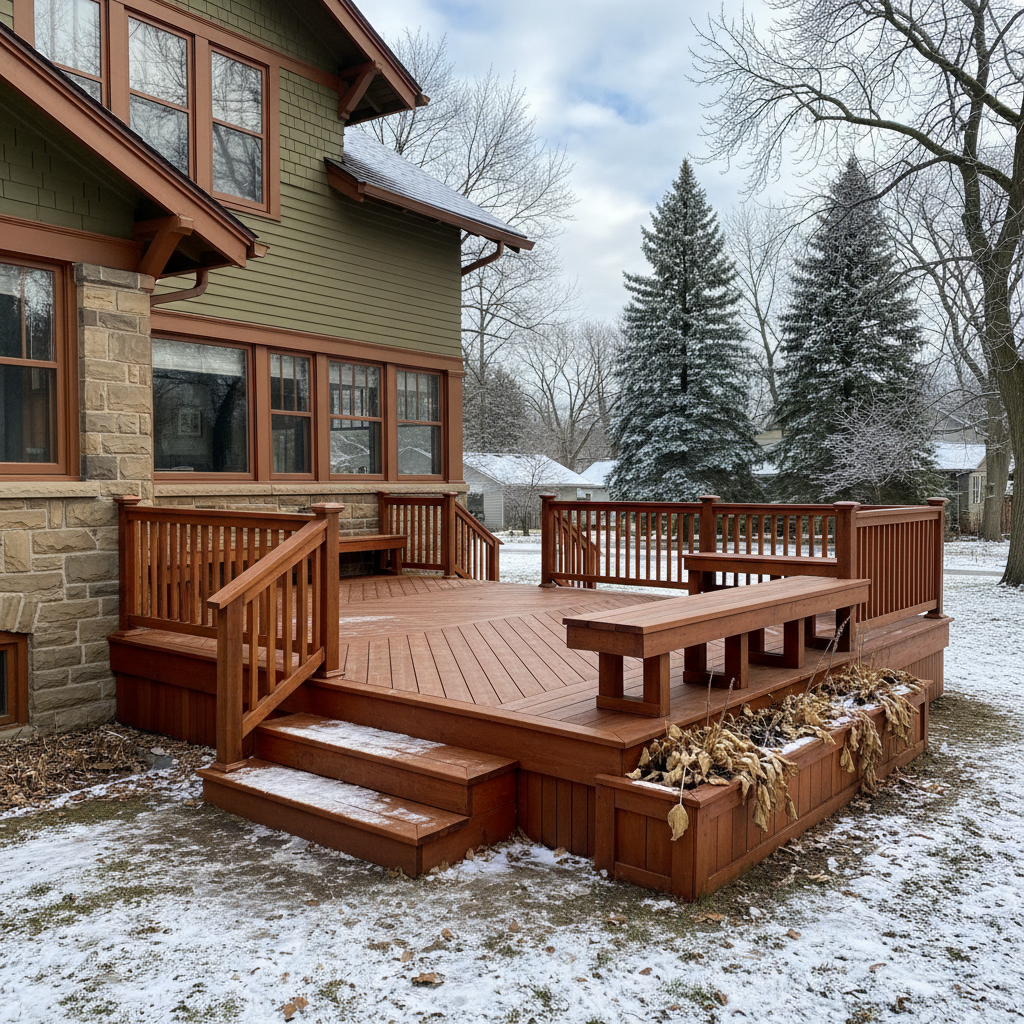
You've got a wooden deck, and you live in St. Paul. That means you're dealing with some of the most extreme weather swings in the country. From brutal winters to humid summers, our climate is a real test for any outdoor structure, especially wood.
When to Schedule Deck Work Around St. Paul's Seasons
Timing is everything when it comes to deck building, repairs, or even just maintenance. You can't just pick a random Tuesday in January and expect good results, right? Here's my take:
- Spring (April-May): This is prime time for planning. The ground's thawing, and everyone's thinking about getting outside. If you want a new deck built or a major repair done, get on a builder's schedule early. We're usually booking out weeks, sometimes months, by mid-April.
- Summer (June-August): Great for construction. The wood's happy, the crews are happy. But watch out for those heavy summer downpours. We can't install decking or apply finishes if it's soaking wet. Humidity can also affect how stains and sealants cure.
- Fall (September-October): Still a solid window for new builds or significant repairs. The cooler, drier air is often ideal for staining and sealing, letting products cure properly before winter hits. It's also a good time for end-of-season inspections and minor fixes.
- Winter (November-March): Forget about new construction or major repairs. The ground's frozen solid, and working with cold, brittle wood isn't ideal. Plus, most finishes won't adhere or cure correctly in freezing temperatures. This is really the time for planning and getting quotes for next year's projects.
How Weather Conditions Affect Deck Projects
It's not just about the season, it's about the daily conditions. As a contractor, I'm always checking the forecast because it directly impacts what we can do and how well it turns out.
Rain: Obvious, right? We can't work in a downpour. More importantly, we can't install decking that's saturated with water. It'll shrink and warp as it dries, leading to gaps and an unstable surface. Same goes for staining; you need a dry surface for proper absorption and adhesion.
Temperature: Wood reacts to temperature. Cold makes it contract and brittle; heat makes it expand. Extreme cold means we can't use certain adhesives or sealants. Extreme heat can cause finishes to dry too quickly, leading to uneven application or poor penetration.
Humidity: High humidity, common in our St. Paul summers, can slow down the drying and curing process for stains and sealants. This means longer wait times between coats, or worse, a finish that doesn't fully harden and wears off quickly. Low humidity, on the other hand, can sometimes cause finishes to dry too fast.
Wind: A strong breeze can be a pain for dust and debris, but it's also a factor for finishes. It can cause stains to dry too quickly or blow airborne particles onto a freshly applied coat. Not ideal for a smooth, clean finish.
Protecting Your Wooden Deck Year-Round
Your deck is an investment, and with our climate, you've got to protect it. Here's what I tell folks:
- Clean Regularly: A good scrub down once or twice a year is crucial. Get rid of dirt, mildew, and algae. These things trap moisture and accelerate rot. Pressure washing is okay if you know what you're doing, but too much pressure can damage the wood fibers. A good deck cleaner and a stiff brush often do the trick.
- Inspect for Damage: Walk your deck regularly, especially after big storms or the snow melts. Look for loose boards, popped nails or screws, splintering wood, or signs of rot. Catching small problems early saves you big headaches later.
- Stain and Seal: This is your deck's main line of defense. A quality stain or sealant protects against UV rays, moisture, and mildew. How often? It depends on the product and how much sun exposure your deck gets. For most decks around here, especially those in full sun in neighborhoods like Highland Park or Mac-Groveland, you're looking at every 2-3 years for a good re-coat. Don't wait until the wood looks gray and parched.
- Winter Prep: Clear off snow and ice regularly. Don't let it sit and melt into the wood, then refreeze. Avoid using rock salt directly on your deck, as it can be corrosive to wood and fasteners. Shovel carefully, using a plastic shovel, and shovel with the grain of the boards.
- Keep it Clear: Don't leave potted plants, rugs, or piles of leaves on your deck for extended periods. They trap moisture underneath, creating a perfect environment for mildew and rot.
Look, maintaining a deck in St. Paul takes a little effort, but it's worth it. A well-maintained deck not only looks better but lasts a whole lot longer. If you've got questions or need a hand, that's what St Paul Deck Solutions is here for. We've seen it all, and we know what works for our Minnesota decks.