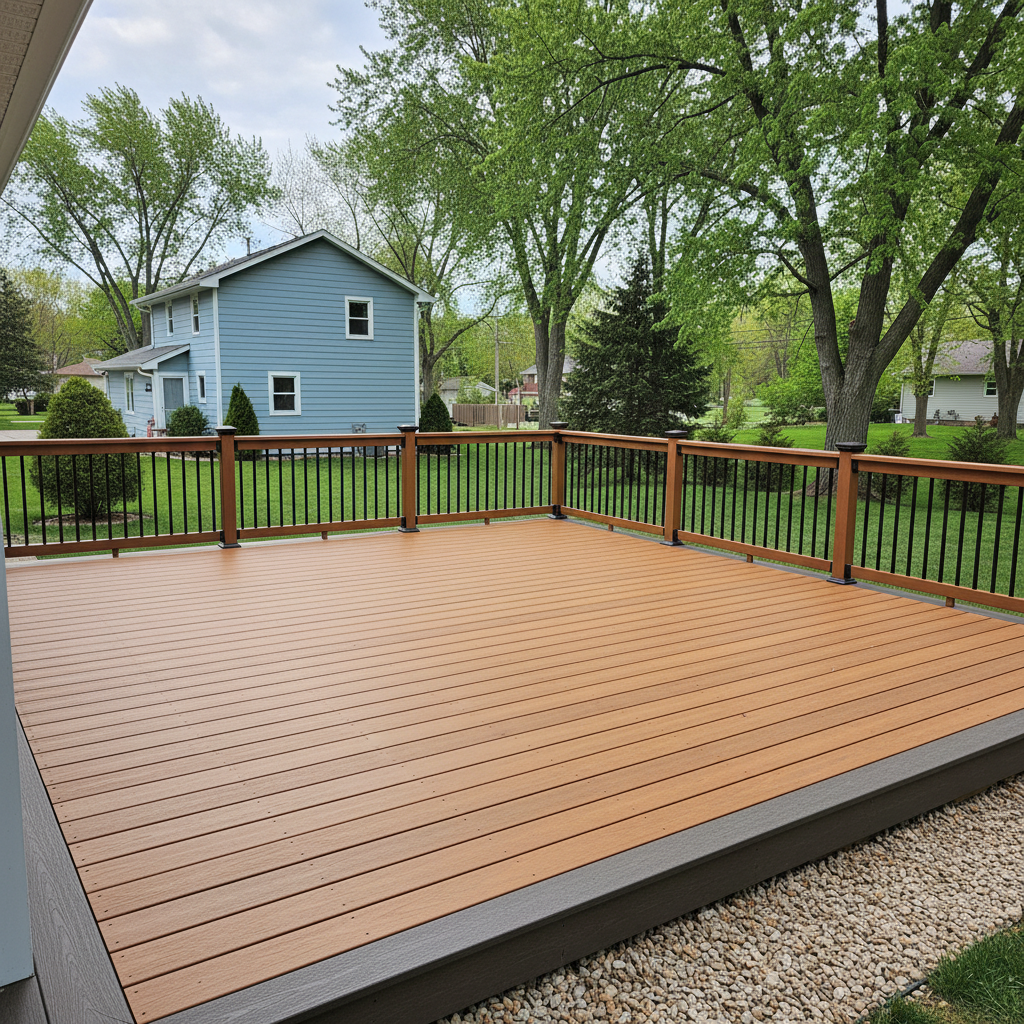
You chose composite decking for a reason, right? Less fuss than wood, no splinters, and it looks good. But 'low maintenance' isn't 'no maintenance.' Especially here in St. Paul, where our weather throws everything at your deck, you've still got to give it a little love to make sure it lasts and looks its best.
I've seen plenty of composite decks around Highland Park and other neighborhoods that, with a little care, could've looked brand new for years longer. Let's talk about what that care looks like.
Regular Maintenance: Keep it Clean
The biggest thing you can do for your composite deck is keep it clean. It's not rocket science, but it makes a huge difference. You're mainly fighting off dirt, pollen, leaves, and sometimes, mold or mildew.
- Sweep it often: Just like any outdoor surface, leaves, dirt, and debris will accumulate. If you let wet leaves sit on your deck for weeks, especially in the fall, they can break down and leave stains. A quick sweep once a week or so, especially after a storm, goes a long way.
- Wash it annually (or more): You'll want to give your deck a good wash at least once a year. I usually recommend doing it in the spring after the snow melts and before you start using it heavily. You can use a soft-bristle brush and warm, soapy water (dish soap works fine, or a cleaner specifically designed for composite decks). Scrub gently in the direction of the grain, then rinse thoroughly with a garden hose.
- Pressure washer caution: A pressure washer can be your friend, but use it carefully. Too much pressure, or holding the nozzle too close, can damage the surface of your composite boards, especially on older generations of composite. Keep the pressure below 1500 PSI and use a fan tip. Always test it on an inconspicuous spot first.
Dealing with Stains and Spills
Accidents happen. A dropped hot dog, a spilled glass of wine, or a grill grease splatter. The key with composite is to clean it up fast. The longer a stain sits, the harder it is to remove.
- Grease and oil: These are the trickiest. Use a degreaser or a composite deck cleaner immediately. Let it sit for a few minutes, then scrub and rinse. Sometimes, a little baking soda paste can help lift stubborn grease.
- Food and drink: Most food and drink spills can be cleaned with warm, soapy water and a good scrub.
- Mold and mildew: Our humid St. Paul summers are perfect for mold. If you see green or black spots, a composite deck cleaner with a bleach alternative (like oxygen bleach) works well. Always follow the product instructions and rinse thoroughly. Don't use straight bleach; it can discolor some composite materials.
Warning Signs: When to Pay Closer Attention
Even with good maintenance, it's smart to keep an eye out for potential issues. Catching things early can save you a headache later.
- Loose fasteners: Check your screws and hidden fasteners periodically. Our freeze-thaw cycles can cause things to shift. If you see a board lifting or feeling wobbly, address it.
- Fading or chalking: While composite is designed to resist fading, some older or lower-quality boards might show signs of it over time, especially on south-facing decks that get hammered by the sun. If you notice significant, uneven fading, it might be a sign of material breakdown.
- Deep scratches or gouges: While composite is tough, it's not indestructible. If you get a deep scratch, it can expose the core material, which might be more prone to staining or moisture absorption. There are some repair kits out there, but often, it's about prevention.
- Unusual softness or sponginess: This is a big red flag. Composite shouldn't feel soft or spongy. If it does, it could indicate water intrusion into the core, especially with older, uncapped composites, or a structural issue underneath. Don't ignore this.
When to Call a Professional
Look, I'm all for DIY, but there are times when it's smart to bring in someone who does this for a living. If you're seeing any of these, it's probably time to give St Paul Deck Solutions a call:
- You've got significant structural concerns – a wobbly railing, bouncy boards, or posts that look compromised.
- You're dealing with persistent mold or mildew that you can't get rid of, or widespread staining.
- Your deck is showing signs of material failure, like widespread delamination or significant cracking.
- You're just not comfortable doing the cleaning yourself, or you don't have the right tools. We've got the experience and equipment to do it right without damaging your deck.
Taking care of your composite deck isn't a huge chore, but it's a necessary one. A little effort each year will ensure your outdoor living space stays beautiful and functional for decades to come, letting you enjoy those short but sweet Minnesota summers.